
Are Standard, Fast, and Heavy official enemy names in Survive a Million Monkeys?
No. They are public guide buckets for how monkeys behave. The listing describes endless rabid monkeys, not an internal bestiary.

Survive a million monkeys enemies on Roblox Place 99409088950210: Standard, Fast, Heavy, large groups, mixed waves, late-run—kill Fast when they cut escape.
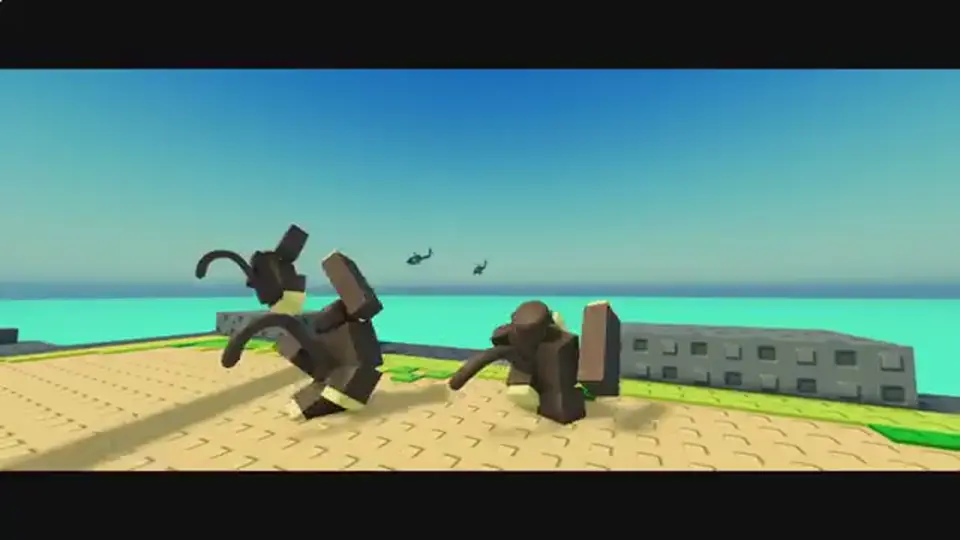
Packs closing on open sand — type labels are player recaps.
~10 min read
Survive a Million Monkeys enemies are endless rabid monkeys on Roblox Place 99409088950210 by gorilla warfare. — "Endless rabid monkeys — bring friends, bring guns, choose your class, unlock powerful guns, and climb the survivor leaderboard." in listing language, not a published bestiary. Public guides sort threats by type (Standard, Fast, Heavy / tough, Large groups, Mixed, Late-run pressure). Those labels are how players respond, not verified internal spawn names. This survive a million monkeys enemies reference maps each bucket to positioning, co-op calls, and upgrade pairing without inventing HP, DPS, or official art. Verified October 4, 2026. Play on Roblox.
Blasting Off (public guide notes: new monkey variants, explosive bananas, extra firearms, melee) recaps mention new monkey variants and explosive bananas on some servers — treat them as extra pressure in the same type buckets until a patch note lists spawn tables. If a third-party wiki assigns fantasy names or stat blocks, ignore them for this Place.
| Fact | Detail |
|---|---|
| Place | 99409088950210 |
| Developer | gorilla warfare. |
| Platform | Roblox · Desktop, Console, Mobile, Tablet |
| Genre | Co-op horde survival · class-based shooting |
| Mode | Co-op · bring friends on the same server |
| Enemy framing | Endless rabid monkeys — no official type index published |
| Public type buckets | Standard · Fast · Heavy / tough · Large groups · Mixed · Late-run |
| Stat policy | HP and DPS TBA — respond by behavior, not numbers |
| Blasting Off | New variants noted in guides — same response buckets until verified |
| Pairing pages | Weapons roles · Upgrades · Map paths |
| Last verified | October 4, 2026 |
Matched by build plan, shared topics, and guide progression — not random related links.
The Roblox listing never prints a spawn codex. What survives community playtests and recap articles is simpler: monkeys arrive in waves whose shape changes — single-lane pressure, sprinters, bulky targets, clumps, combinations, and end-of-run density. This page names those shapes the way survive a million monkeys enemies guides do so your squad shares one vocabulary.
None of the rows below are official internal IDs. They are response categories. When Blasting Off adds a new silhouette, ask which category it behaves like before you invent a seventh type.
| Type | How to respond |
|---|---|
| Standard | Baseline rabid monkeys — steady pressure on the nearest lane |
| Fast | Close gaps on wide pathways — priority when they cut your escape |
| Heavy / tough | Absorbs focus fire — assign high-damage roles or team burst |
| Large groups | Density clumps — area-clear upgrades and AoE gun roles shine |
| Mixed | Several types at once — call targets in co-op before you split |
| Late-run pressure | Spawn swell — spend Gems before this phase; keep an exit open |
Standard monkeys are the baseline stream — not harmless, just the rhythm you learn first. They teach spawn direction and how fast your current gun role clears a lane. If Standard density already traps you, the fix is usually map positioning or upgrades timing, not chasing a mythical counter-pet from another game.
Early minutes may feel like Standard-only swells. Mid-run introduces pairs — Fast ahead of Standard, or Heavy behind a clump. Late-run pressure is when several buckets overlap on purpose. Plan your Gem spends on upgrades before that overlap, not after you are pinned.
Fast types are the ones that eat distance while you stare at a Heavy target. Heavy monkeys punish slow kills, but Fast monkeys punish frozen paths — they reach wide pathways, pinch chokepoints, and turn a controlled kite into a surround. When both are present and Fast monkeys are vectoring toward your only exit, priority goes to Fast even if Heavy looks like the bigger threat on screen.
That priority rule is about space, not a hidden damage chart. We do not publish DPS tiers for monkey types because the client has not shipped numbers this wiki can quote.
You rotate backward and the gap behind you closes faster than your movement buff. You burst a Heavy monkey while three Fast types touch your hitbox radius. Co-op partners peel to opposite lanes and Fast types bridge both groups. Each case is a call to throttle Heavy focus until the sprint lane is empty.
If recap labels put you on a mobile pick such as Outlaw, use open ground — see classes for names, not official skill text. Whoever is forward still needs to peel Fast monkeys that cut the team's only exit.
Heavy / tough types absorb more punishment than Standard bodies in player recaps — again, no verified HP. Behaviorally they slow your throughput: you stand longer to drop one target while the wave advances. Handle them with high-damage gun roles, brief focus fire, and co-op callouts so nobody solo-sticks a Heavy while Fast types flank.
| Situation | Heavy response |
|---|---|
| Single Heavy in an open lane | Focus fire when Standard density is low; keep moving between shots |
| Heavy behind a Large group | Area-clear the clump first unless Fast is flanking — then peel Fast |
| Heavy at a chokepoint | Use the choke for seconds, then retreat before Mixed wraps |
| Heavy during Late-run | Only commit if exit path is confirmed — stall kills runs |
Public guides rarely treat these as separate boss phases. They are density modifiers inside the same horde loop. If a recap names a unique monkey, verify it on Place 99409088950210 before you build a whole strategy around one screenshot.
Large groups are clumped Standard and Fast bodies — sometimes Heavy tucked inside — that punish single-target pacing. When the pack occupies more of your arc than you can melt one-by-one, switch to area-clear upgrades and AoE gun roles from weapons. Focus fire returns when the clump breaks into lanes you can kite.
Large groups at range are a shooting gallery if ground is open. Large groups at a dead end are a wipe timer. The type label matters less than whether you still have two directions to move — survival tips covers exit planning; this page names when the clump forces AoE.
If you see clumps forming two waves in a row, that is the signal to spend on area-clear before the third swell — details on upgrades. Hoarding Gems while Large groups stack is the same mistake as ignoring Fast types.
Mixed means multiple type buckets at once — Standard filling space, Fast pressuring flanks, Heavy anchoring the pack, sometimes a clump on the rear arc. Solo players prioritize exit threats first (usually Fast), then clump control (area-clear), then Heavy when the lane is safe. Co-op adds one rule: say the type aloud so two players do not both chase Heavy while Fast closes the squad.

Front player clears the nearest lane and calls “Fast on left” or “Heavy focus.” Flank player watches the wide pathway you will need in ten seconds, not the kill feed. After Blasting Off variants appear, keep the same callouts — “explosive” is a behavior warning, not a new call sheet until verified.
If calling targets feels useless because everything touched you at once, the mistake is usually position, not aim. Reset to open ground on map before debating type priority again.
Late-run pressure is the label players use when spawn density spikes — more bodies, more overlapping types, less time to spend between swells. It is not a separate mode; it is the same monkeys with fewer forgiveness windows. Official listing language about climbing the survivor leaderboard assumes you survive this phase long enough to matter.
| Late-run signal | What to do |
|---|---|
| Fewer safe seconds between swells | Spend remaining Gems on upgrades before the next spike |
| Mixed types every engagement | Revert to Fast-first calls and area-clear for clumps |
| Chokepoints become traps | Fight on wide pathways only; abandon “just one more burst” |
| Co-op spread thin | Regroup toward one open lane instead of chasing distant kills |
Blasting Off (public guide notes: new monkey variants, explosive bananas, extra firearms, melee) notes can feel like permanent Late-run on some nights — new variants and explosive bananas add visual noise. Read updates for patch-level facts; respond with the same type buckets until spawn data is verified.
Types tell you when a gun role wins; weapons tells you which role band to unlock. Fast-heavy nights favor stable output and movement. Heavy anchors favor high-damage bursts. Large groups and Mixed clumps favor AoE and area-clear. None of this requires invented monkey HP — it requires matching behavior to tools you buy with Gems.
| Type stress | Gun role (see weapons page) | Upgrade bucket |
|---|---|---|
| Standard density | Fast-fire or stable single-target | Damage or attack speed |
| Fast on flanks | Fast-fire while kiting; movement upgrades | Movement · attack speed |
| Heavy anchor | High-damage focus windows | Damage |
| Large groups | AoE roles | Area-clear |
| Mixed + Late-run | AoE plus mobile fast-fire backup | Area-clear · survivability · movement |
Medic, Engineer, Juggernaut, Bomber, and Outlaw change how long you can hold a mistake — recap names on classes, skills TBA. Types still dictate whether you should hold at all.
Use this as a between-runs scan. Each row ties a type misread to a fix elsewhere on the wiki — no fake stat tables, no off-Place guides.
| Mistake | Fix |
|---|---|
| Tunnel vision on Heavy while Fast closes exit | Kill Fast first when they threaten space — section above |
| AoE spam into empty lanes | Save area-clear for Large groups and Mixed clumps |
| Calling “focus boss” on every Heavy | Treat Heavy as throughput tax, not a separate raid phase |
| Ignoring Mixed callouts in co-op | Voice the type; one player anchors lane, one watches flank |
| Entering Late-run with unspent Gems | upgrades before density spikes |
| Fighting Large groups in dead ends | map + survival tips |
| Copying enemy names from other Roblox hordes | Place 99409088950210 only — Play on Roblox |
| Assuming Blasting Off variants need new math | Same buckets until verified — updates |
Before you commit damage to Heavy, glance at the far edge of the pack. If Fast bodies are parallel to your escape path, switch targets for two seconds — that glance is cheaper than a full squad wipe.
Spend Gems before the next Late-run swell: upgrades. Match gun roles to the table above: weapons and weapon tier list.
If types felt fine but you still died to geometry, read map and survival tips together — Fast monkeys punish bad paths more than low damage.
No. They are public guide buckets for how monkeys behave. The listing describes endless rabid monkeys, not an internal bestiary.
Kill Fast first when they are the ones closing your escape or flanking co-op. If Fast is distant and a Heavy blocks a choke you must clear, brief focus fire can be correct — space decides.
Not verified for this wiki. Respond by type behavior and map paths, not copied stat blocks.
Recaps mention new variants and explosive bananas. Treat them as extra pressure inside the same buckets until spawn data is official.
Area-clear upgrades and AoE gun roles — timing on upgrades, roles on weapons.
No verified invite for Place 99409088950210. Use the Roblox game page and this wiki’s updates page.
October 4, 2026
Matched by build plan, shared topics, and guide progression — not random related links.