
Does Survive a Million Monkeys have named maps?
No official map names are verified on the listing. This page uses terrain types only: open areas, wide pathways, resource areas, chokepoints, dead ends.

Survive a Million Monkeys map guide: open areas, wide pathways, resource pockets, chokepoints, dead ends. No official map names. Place 99409088950210. Oct 2026.
Open pathways versus getting boxed in by the horde.
~7 min read
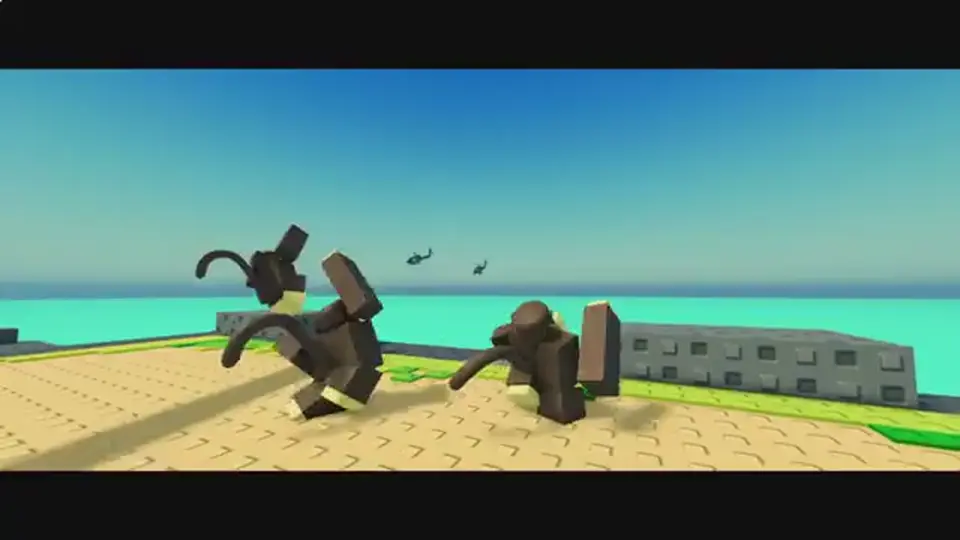
This Survive a Million Monkeys map guide describes terrain types only for Place 99409088950210 (gorilla warfare.). There are no official map names on the live listing — no verified POI atlas, no named boss arenas pulled from fan fiction. Use layout reads to pick gun roles, co-op lanes, and escape paths. Verified October 4, 2026. Play on Roblox.
The five buckets match how public materials talk about the world: open areas, wide pathways, resource areas, chokepoints, and dead ends. Pair them with survival tips (keep moving, escape routes, avoid corners) and monkeys for threat calls.
| Terrain | Play note |
|---|---|
| Open areas | Best for kiting, grouping setups, and long-range roles |
| Wide pathways | Default rotation routes — keep one lane clear for escape |
| Resource areas | Worth entering when upgrades or pickups spawn — economy TBA |
| Chokepoints | Short holds with AoE or frontline classes if exit stays open |
| Dead ends | Avoid unless you can clear fast and leave immediately |
| Official map names | None verified — terrain vocabulary only |
| Place ID | 99409088950210 |
| Setting note | Open areas · wide pathways · chokepoints · dead ends (no official map names) |
| Verified | October 4, 2026 |
Matched by build plan, shared topics, and guide progression — not random related links.
No — for survive a million monkeys map research, the honest answer is terrain types, not titles. The Roblox listing for 99409088950210 sells the horde loop (classes, guns, Gems, leaderboard) without publishing a labeled cartography sheet this wiki can quote. Third-party pages that name districts after memes or other games are invented unless a future official post proves them.
That constraint is useful, not a missing feature. Co-op callouts stay clearer when everyone shares one vocabulary: "wide path north," "open pad," "choke by spawn," "dead end — rotate out." You are navigating geometry and spawn pressure, not quest markers on a named overworld.
gorilla warfare. built a co-op horde shooter where readability comes from lanes and exits. Beginner guide already tells you to learn where monkeys first flood and which ground gives two ways out — that scouting replaces a labeled atlas until official names exist.
Other monkey-themed Roblox experiences reuse vibes but not this Place ID. Codes, upgrades, and layout from unrelated titles will not transfer. Join 99409088950210 only — Play on Roblox.
Open areas are your default fight floor: enough space to keep moving, arc-kite, and reopen an escape route when a flank creeps in. Long-range gun roles from weapons love the sight lines; mobile Outlaw fantasy from classes loves the lateral room.
Open does not mean safe — it means options. Density still rises; the advantage is that you can choose which side of the pack stays thinnest. When explosive banana pressure from Blasting Off notes on updates shows up, open ground also gives you room to dodge telegraphed bursts we cannot stat yet.
Survival tips recommend group then AoE — bait monkeys into a clump on open ground, then spend area-clear upgrades from upgrades where overlap is real. Never set up clumps inside corners; open areas keep the bait player off the geometry hook.
Spread friends across the pad so no one shares a single retreat vector. Two players back-to-back in the center feels cinematic until both need the same exit. Stagger arcs: one holds forward lane, one watches rear wide pathway.
Wide pathways are the highways of a nameless map: the lanes you rotate along when a choke gets too hot, when a friend calls a path-cutter, or when you need to reset after a Gem spend between swells. Think of them as reserved escape routes — if monkeys occupy yours, reposition before DPS, not after.
In squad play, assign pathway ownership loosely: "left wide," "right wide," "center only when called." Without official map names, these calls still work because they describe width and direction, not fan-fiction districts.
| Callout style | Example |
|---|---|
| Direction + width | Rotate east wide path |
| Relative to spawn | Wide lane back toward lobby slice — TBA |
| Threat linked | Path-cutter on our wide — peel left |
| Avoid fake POI | No "Monkey City" — use terrain words |
Chokes shrink width on purpose; pathways restore it. Flow: fight forward in open areas → slide into a choke for a timed hold → exit through the wide pathway you decided before you entered the choke. Survival tips cover the retreat habit; this page names the terrain where it lives.
Resource areas are pockets where pickups, upgrade triggers, or economy beats may spawn — exact loot tables stay TBA until datamined or officially posted. Push in when the squad still owns a wide pathway back out, not when density already pins you against a wall.
Treat resource runs like risk/reward detours: one player scouts width, others hold lane integrity against path-cutters (monkeys). If MONKEYS or other Gem grants from codes funded your build, a resource trip is how you convert currency into stats on upgrades before the next spike — not a mandatory route every wave.
Some resource layouts may sit near dead ends — common in horde games. Grab fast, leave faster. If pickups require standing still, pre-assign a friend to clear the exit lane while you channel. Solo players should skip questionable pockets until they know the terrain rhythm.
Public Blasting Off recaps mention extra firearms and melee — resource beats might shift when new interactables appear. Re-scout after you read updates; do not assume last week’s path still matches October 2026 live listing behavior.
Chokepoints narrow monkeys into a funnel — great for focus fire, short Juggernaut stands, or Bomber-style AoE windows — terrible when you forget the exit timer. Hold only while your wide pathway stays open and co-op knows you are stopping forward progress.
Signal before you hold: "holding choke three seconds" gives friends permission to peel path-cutters on the flanks. When the timer ends, rotate out even if monkeys still trickle — density math wins stationary defenders.
Spend Gems on damage, attack speed, or area-clear before you rely on choke farming — survival tips warn about upgrade before spikes. A choke without stats is just a slower wipe.
Recaps cite explosive banana attacks under Blasting Off. Chokes can amplify splash if bananas land in confined geometry — another reason to keep holds short and exits honest after the update notes in public guides.
Dead ends are rarely safe — the wiki labels them avoid unless you can clear fast and leave. The only acceptable dead-end fight is a planned burst: you entered knowing monkeys count is low, you have cooldowns or co-op DPS ready, and your team already cleared the wide pathway for the exit sprint.
If any of those conditions fail, treat the dead end as a loss-in-progress. Corners inside open zones behave like micro dead ends — same rule. Survival tips explicitly say avoid corners; map vocabulary gives you the terrain word for why.
| Scenario | Verdict |
|---|---|
| Mixed wave already spawned | Leave — do not enter dead end |
| Solo player farming one monkey | Skip — rotate to wide pathway |
| Co-op burst with timer call | Allowed briefly if exit is open |
| Resource pickup in cul-de-sac | One player in, squad holds wide path |
| Leaderboard push ego stand | Avoid — geometry beats bravado |
If teammates go down in narrow geometry, clear path-cutters and reopen wide lanes before you hero dive — revive mechanics stay TBA. Map reads still apply: bring the fight back to open areas even if it costs a few seconds of travel.
Turn terrain into habits: survival tips for movement and escape routes, classes for frontline vs mobile picks, monkeys for threats that seal chokes.
Track Blasting Off geometry changes on updates — new variants and explosives can shift which chokes feel safe on Place 99409088950210.
No official map names are verified on the listing. This page uses terrain types only: open areas, wide pathways, resource areas, chokepoints, dead ends.
Open areas and wide pathways — fight where you can keep an escape route. See beginner guide.
Chokepoints are narrow on purpose for short holds with a planned exit. Dead ends remove rotation entirely — avoid during mixed waves.
Optional detours when pickups or economy beats may spawn — rules TBA. Keep a wide pathway open.
Public guides note new monkey variants and explosive bananas; layout names still unverified. Read updates.
October 4, 2026
Matched by build plan, shared topics, and guide progression — not random related links.